
ABOUT ANNIKA
ABOUT ANNIKA
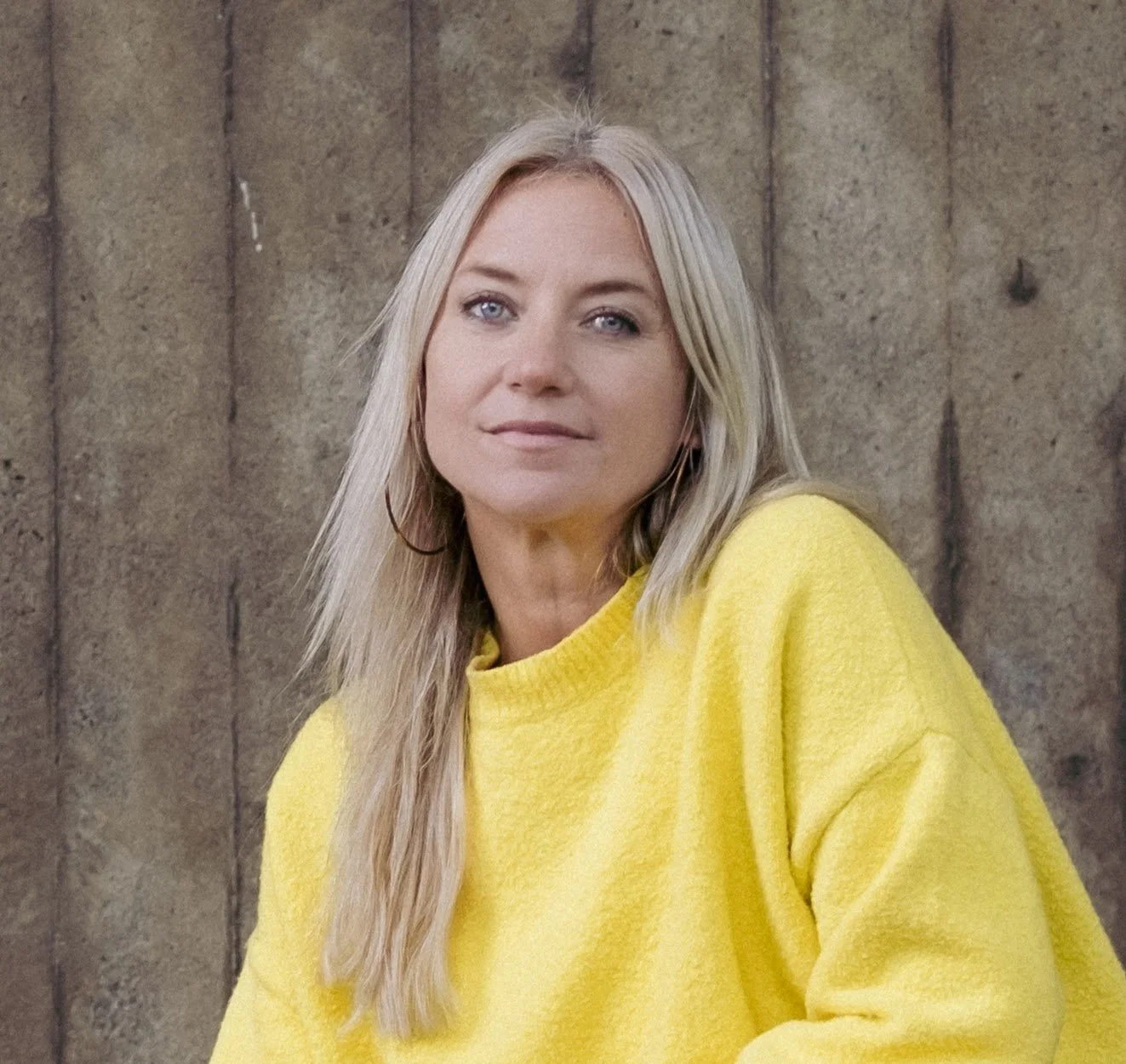
About Annika
My work is rooted in lived experience — not theory.
For many years, I lived a life that looked successful on the outside: senior leadership roles, an international career, constant momentum. I worked closely with artificial intelligence in my role at Google, engaging with early generations of large language models — what is today known as Gemini (previously Bard).
At the same time, my inner world was carrying unresolved trauma.
The moment everything changed
My life took a profound turn when my husband was murdered in a terrorist attack in 2017.
This was not only a personal loss — it was a complete rupture of safety, meaning, and identity. It forced a confrontation with grief, shock, and vulnerability on a level I had never known before.
In the years that followed, I learned that healing is not about staying positive or moving on. It is about developing the capacity to stay present with what hurts — slowly, honestly, and with compassion.
This experience is inseparable from the work I do today.
From survival to integration
What followed was not a quick recovery, but years of deep inner work: emotional processing, shadow work, nervous system regulation, grief, and learning how to live again from a place of truth rather than protection.
Insight alone was not enough.
Performance was not enough.
Spiritual concepts were not enough.
Transformation required embodiment — learning how to feel without collapsing, how to meet pain without bypassing it, and how to rebuild inner safety from within.
Bridging technology and healing
I never lost my love for technology — especially AI.
My background at Google gave me a deep understanding of how artificial intelligence can reflect, analyse, and amplify patterns. Over time, I began to see how the same technology could be used not just to optimise systems, but to support human self-awareness.
Used consciously, AI can act as a neutral, non-judgmental mirror — helping people notice emotional patterns, limiting beliefs, inner critics, and unconscious coping strategies they struggle to see on their own.
This is where my past and present converge.
GURU in Your Pocket — a digital temple
Out of this integration, GURU in Your Pocket was born. I created the app that I was missing.
The app is designed as a digital temple — a quiet, intentional space for reflection and inner work, carried in your pocket. Instead of travelling across the world to sit with a teacher, the temple comes to you.
It supports self-inquiry, shadow work, and emotional awareness through consciously designed AI — making deep inner work accessible in everyday life.
My mission is to democratise personal development.
To make this work available not only to those with time, money, or access to retreats and teachers — but to anyone with a mobile phone and the willingness to turn inward.
Reclaiming attention in a distracted world
Another core part of my mission is attention.
So much of modern life pulls us outward — into comparison, distraction, and quiet self-erosion. I want to reclaim 30 minutes of that time.
Thirty minutes that might otherwise be spent scrolling, comparing, or feeling “not enough” — and redirect it toward grounding, reflection, and inner strength.
Time that leaves you more resourced, not depleted.
Writing, teaching, and sharing the work
Alongside the app, I am writing books that explore this work in depth.
My current book,
Guru In Your Pocket: Your Path to Personal Transformation — with AI as Your Enlightened Guide,
weaves personal experience with psychology, neuroscience, ancient wisdom, and artificial intelligence — offering a modern path to healing and self-leadership.
Additionally, I founded the Swedish Terror Victims organisation “Förening för terrorns offer och anhöriga” in 2025 - working closely with decision makers and authorities to form processes and systems that effectively supports terror victims in their specific needs. www.terrornsoffer.se
Why I do this work
I do this work because I know what it means to lose what cannot be replaced — and to discover, slowly, that wholeness is still possible.
Not by becoming someone else.
But by meeting ourselves with truth, courage, and compassion.